Tally Sticks
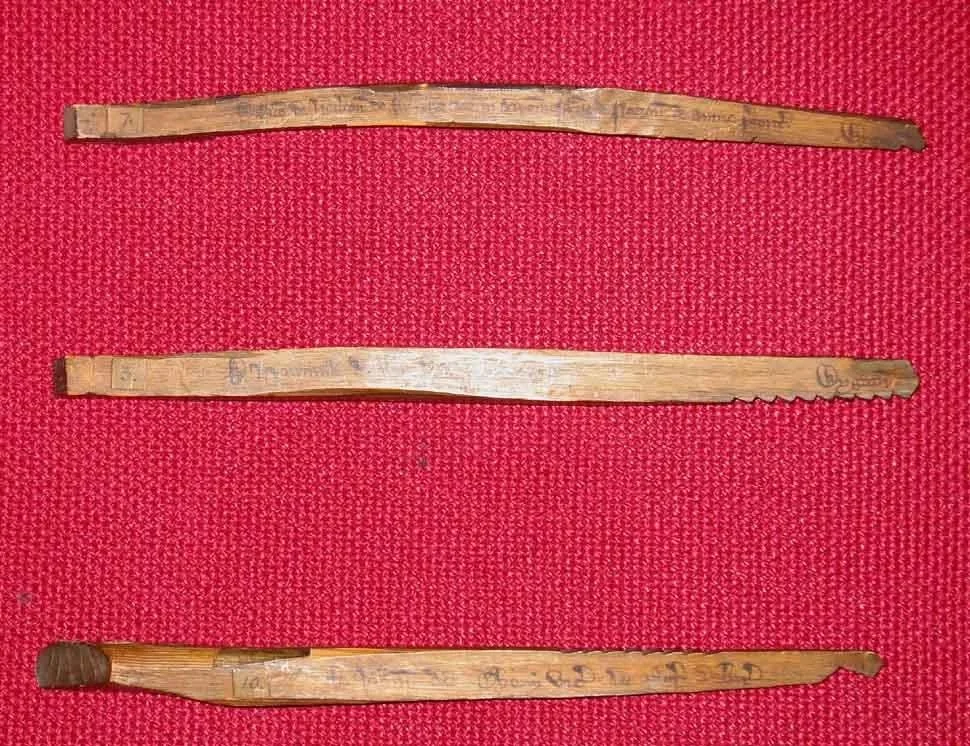
Tally sticks were pieces of wood that people would use as receipts. Basically, before paper and computers were widely available, people would use sticks are receipts for loans. Notches would be cut on a stick representing the money being loaned/credited, it would be split down the middle, and when the debtor paid back his creditor with the money, the two sticks would be reconnected and destroyed.[1]
Marco Polo, writing in his travel book about the province of Zardandan in 13th century China, noted,[2]
“When these people have any business transactions with one another, they take a piece of stick, round or square, and split it, each taking half. And on either half they cut two or three notches. And when the account is settled the debtor receives back the other half of the stick from the creditor.”
While not money itself, the creditor half of a tally stick could be used in lieu of real money, if the debtor were sure to pay it back. Exempli gratia, a creditor could show that he was owed a silver or gold coin and use his half of the tally stick to buy something that cost 1 silver or gold coin, assuming that the vendor would accept it.
In essence, bitcoin is a modern tally stick for dollars. People can tally up bitcoin to $90,000 and buy $90,000 worth of things being sold.
That being said, the founder of Binance, Changpeng Zhao (CZ), had a public debate with Peter Schiff over the relative merits of gold and bitcoin at the Binance Blockchain Week in Dubai on December 4, 2025. CZ presented Peter with a kilo gold bar and asked him if it were real, if it weren’t filled with tungsten instead of gold. Peter answered honestly that he didn’t know. That he would have to check. Many bitcoiners considered it to be checkmate.[3]
Fraud is a risk when trading commodities and credit for commodities. Cotton, coal, oil, copper, silver, and gold can all certainly be faked.
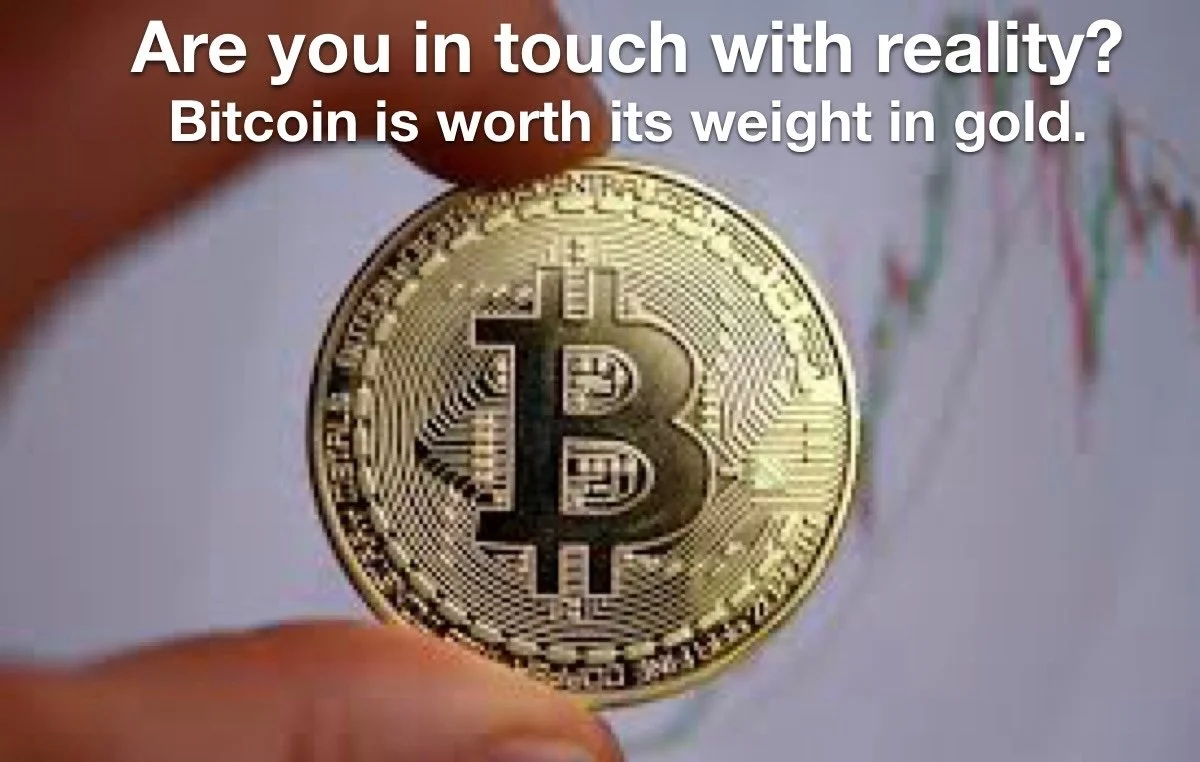
Bitcoin is certainly a fake gold coin.
[2]https://www.gutenberg.org/files/12410/12410-h/12410-h.htm#NoteAnchor_L8 Chapter L, Concerning the Province of Zardandan.
[3]https://www.ccn.com/education/crypto/peter-schiff-cz-bitcoin-vs-gold-debate-dubai/